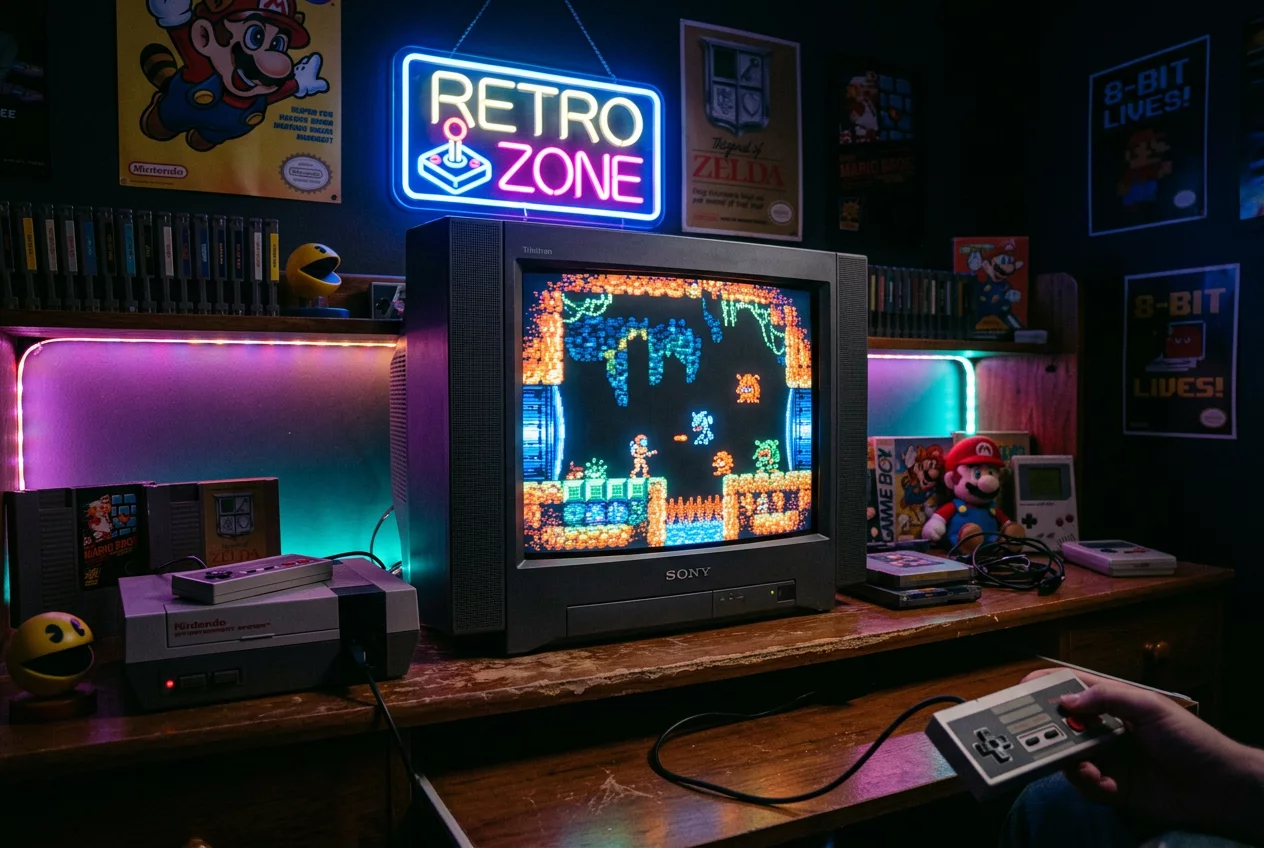
The Greatest Crossover of the 8-bit Era
History rarely gives us collaborations as bold as the union between the high-flying toads from space and the grit-and-grime brothers from the city streets. Released during the golden age of side-scrolling action, this title managed to merge two distinct universes into a single, cohesive adventure that pushed hardware to its absolute limit.
The technical achievement here was remarkable. While many crossover projects felt like rushed attempts to capitalize on multiple fanbases, this developer ensured that the visual fidelity of both franchises remained intact. Characters moved with a fluidity that was often absent in later 16-bit ports, and the background art transitioned seamlessly from urban jungles to massive space cruisers.
Collaborative Design Architecture
The brilliance of the design lies in how it respects the rules of both worlds. The toads bring their signature humor and eccentric combat style, while the martial arts duo provides a grounded, disciplined approach to combat. Together, they create a balanced roster that caters to different player preferences without breaking the internal logic of the game world.
Stages are constructed with a clear understanding of space and movement. Whether you are navigating a moving vehicle or battling through a high-tech laboratory, the architecture forces players to think about positioning and timing. The difficulty curve is steep—a hallmark of its era—but it rewards coordination and patience above all else.
Visual and Auditory Polish
The soundtrack is a masterpiece of synthesised energy. It combines the heavy-hitting beats associated with urban brawlers with the fast-paced, melodic hooks of space adventures. Each track enhances the sense of urgency, driving the player forward through waves of diverse enemies. Visually, the use of color palettes highlights the contrast between the dark, metallic interior of the interstellar ship and the vibrant, neon-lit cityscapes.